Friday, 2 August 2013

Afternoon Tea at Sedgwick House


When deciding where our next event should be Susie and I decided to try and raise some funds by holding Afternoon Tea, on the patio of Sedgwick House. What seemed like a good idea at the time was hard work on the day, due to the extremely hot weather.
 OK I know it's summer but when do we get weather like we have experienced recently?

Due to the fact that I personally was one of the hosts, I asked Babs to write about the event.
Over to you Babs! (Only say nice things or I will be forced to edit!)  


Afternoon Tea at Sedgwick House

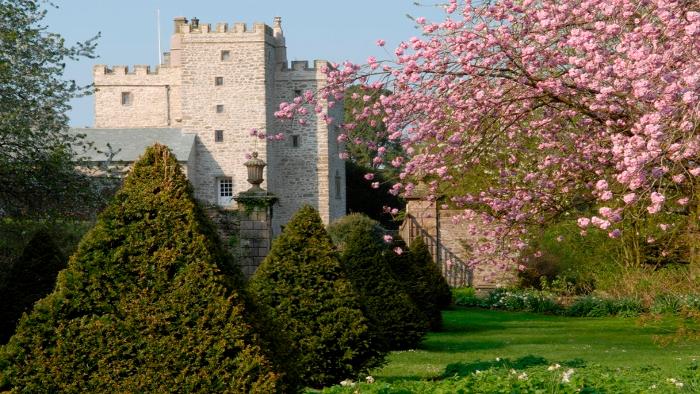
For our July meeting and to make the most of the glorious weather, the Wombelles were invited to ‘Chez Marlene & Susie’ for Afternoon Tea in the beautiful setting of Sedgwick House on the patio overlooking the Sedgwick Village Cricket Club. Sedgwick House lies on the east bank of the Kent River. (More history below)

We were well catered for with home cooking courtesy of Marlene & Susie who arose at the crack of dawn to feed the masses on the terraces of this formidable house.

Sandwiches and cakes galore all home-made and most delicious were scoffed, iced water for the cooling effect in the blazing sun and copious cups of tea were enjoyed by all. (Alas, still no chips for Janet!) Also invited were friends and neighbours of our hosts who generously brought prizes for our raffle, wine, chocolates, books, and other delights all in aid of the Wombelles fund. Monies raised will enable the group to finance itself and maintain the work of supporting ladies going through and recovering from the effects of treatment. The raffle raised sufficient fund to pay Cancercare for the use of their meeting room and for us to maintain our mobile phone, which is the main contact for the group.
 
We had a tour, courtesy of Susie of the grounds of this lovely old house which has a swimming pool, tennis court and ample gardens next to the local cricket pitch. (This may be quite dangerous in summer when the big hitters arrive!) I am told League matches are played here during the season.

As an extra treat we were able to take home some of the food we had not been able to finish, which was generally more cake (well why not!) and the flower decorations which had been made for the Raffle by one of the residents (who was a florist in a past life) two of our ladies were joyously happy when they won. (Rhona and Jean - lucky ladies!)

A thoroughly enjoyable afternoon and one we would like to pencil in for next year again, although not sure if Marlene & Susie need more than a year to recover!
Thanks ladies you are both stars

Babs


Sedgwick House 2000


Thank you for your comments Babs.
 You were correct when you mentioned next year ....  may have to be soup and a roll!


The Sedgwick House History

For those interested in a bit of history Sedgwick house was originally built for the Wakefield family who were Quakers. William Henry chose to use Paley and Austin, a local firm of Architects from Lancaster, who were very fashionable, and it was no doubt they who dictated the use of neo Gothic design, which is often referred to as Victorian gothic.
They are the architects of a number of churches in the area among them Natland and Crosscrake, and also extensions to Holker Hall, which shares a number of features with Sedgwick House. The ecclesiastical influence is very noticeable in the great hall at Sedgwick.
The neo-gothic style calls for a lot of decorative stonework and it was for this reason that sandstone, which is more easily worked, was used in the construction rather than the local limestone. The mullions on the ground floor windows and the balcony of the hall are made from polished granite, which came from the newly opened quarries near Shap, north of Kendal. The sandstone came from the Lancaster area and was brought by barges on the canal to Sedgwick Hill Bridge – the one standing in the field above the cricket ground. (These bridges have been preserved as they have listed status and some stand rather incongruously in the middle of fields.)
 A rail track was constructed to take the stone to the site across the field, which was later made into the cricket field. The whole enterprise was a huge undertaking: considerable excavation was needed to provide the cellars, and I have been informed that 1 square metre of wall would have needed 1 tonne of stone, so several thousand tonnes of stone would have had to be transported. 

 In spite of this, residents today will be interested to know that the cost of construction in 1867 was between £40 – 50,000. The building was completed in 1868. You will find 1886 on a number of documents but this arose from a clerical error.


 Sedgwick House circa 1887


Mary Wakefield

On famous resident of Sedgwick House was Mary Wakefield (1853 - 1910).  Her father allowed her to go abroad to study music, where she developed her singing and would undoubtedly have been able to make a career on the concert stage. Her father, however, did not consider this a suitable activity for someone of her social standing and would not allow her to become a professional musician. Mary was a lady of considerable energy and determination so she did not retire into the conventional Victorian occupations considered suitable for women, but devoted her energies in bringing to others her love and knowledge of music. She is quoted as saying that she did not want to build bandstands where people could come and listen to music but rather she created a vehicle – the Westmorland Music Festival, which encouraged people, who would not otherwise have the opportunity, to come together and perform music. 

After Mary’s death, the Festival was renamed as the Mary Wakefield Westmorland Music Festival. It was a competitive Festival but none of the prizes were money. The winners competed for a series of often very beautiful trophies, which were donated by individuals and groups from the area.

The first Festival was held in the covered tennis court at Sedgwick House and four quartets of singers from neighbouring villages took part. The Festival was held annually and grew quickly, soon having to move to Kendal where it took place in St. George’s Hall behind Finkle Street.
It was held in May at the end of the winter months, which were spent rehearsing, by the various groups and choirs. Mary devoted these months to travelling round the villages in her pony and trap, often late into the night, to help the choirs rehearse as some of them had very little knowledge and experience of music.


Mary Wakefield and her sister Agnes setting out to rehearse a choir 


Sedgwick House 1941 – to date

When the house was requisitioned, by the government in 1941 the family had 3 weeks to vacate the house; inevitably a lot of valuable records were destroyed. The family still retained the grounds ploughing up the land at the bottom of the west terrace to produce crops to help with the war effort.

At the end of the war none of the family was interested in taking back the property and so it was sold in 1948 to the Lancashire County Council. They set up a boarding school for children who suffered from severe epilepsy, which continued from 1951 to 1985. The school was closed in 1985 when improvements in medical care in mainstream schools, made it possible for these children to be integrated into mainstream education.

In 1986 the property was purchased by a local developer who obtained planning permission to convert the property into 19 Executive Apartments with Leisure facilities which we have today. So the house is once again a home, although be it to a number of different families, who love and appreciate the house and gardens making every endeavour to keep the property as it was originally designed, repairing the clock in 2006 brought the  house back to life and part of the village once again.
We would like to thank everyone who attended for their support and look forward to inviting new members to join our group.

We would like to remind you that we meet on the third Tuesday of each month at 1.30 pm in the offices of; Cancercare, Lakes Centre, Kendal, (unless we have organized an event).

We now also have a blog address, which has been set up by one of our members:

http://the wombellescancergroupkendal.blogspot.co.uk/

We can also be contacted on the following Mobile No: 07770851896.

This is the group’s mobile number, which is checked for messages on a daily basis.

Thursday, 4 July 2013

Sizergh Castle

Summer finally arrived on the 16th June for our escorted tour of Sizergh Castle, unfortunately, it ended several days later. 
(But that’s the Lake District for you).

We arranged to meet Babs at the Café for coffee prior to the start of our guided tour, she always makes every effort to support our group as she was one of the original founders.

I should explain that Babs is our Cancer Support Nurse, who we can contact should we have any concerns. Babs is available by phone, text, or email, and will always respond the same day or leave a message. I personally have found her to be very caring and a great comfort to me, especially in the early days of my diagnosis.

We had our guided tour around the house which was extremely interesting, and then we had tea before walking around the gardens and grounds, ending in the Gift Shop.

Once again we had a lovely afternoon and got to appreciate what this area has to offer.


Sizergh Castle

Sizergh has been associated with the Strickland family since 1239, when the heiress Elizabeth Deincourt married William de Stirkeland. The solar tower of the castle was a potent symbol of the Strickland’s power during the Middle Ages, when they played a leading role in the wars with Scotland and France. Prominent as Catholic royalists throughout the 17th century, the Stricklands went into exile in 1688 with the court of James II at Saint-Germain in France. They returned to Sizergh by the early 18th Century as impoverished Jacobites, but thanks to the careful efforts of Lady Winifred Strickland, they were able to afford a few baroque-style alterations to the house. Sir Gerald Strickland, later Lord Strickland of Sizergh (1861-1940) along with his second wife Margaret Hulton, installed the famous rock garden which was laid out in 1926-8. In 1931 the estate transferred to Lord Strickland's daughter Mary and her husband Henry Hornyold.
 They and their son Lt-Cdr Thomas Hornyold-Strickland gave the house to the National Trust in 1950.


Old dining room


 Dated 1563, this is the earliest of the Elizabethan panelled rooms and was described in 1569 as 'the chamber where thei dyne'. 
As such, it would be used by family and guests for informal meals, with seating for at least 20 people.


Inlaid chamber


The inlaid panelling is some of the finest ever made for an English house. All the main panels and friezes are inlaid on a sumptuously large scale, with geometrical strap work and foliated scrolls which use inlays of poplar and bog oak. This is a must see room!

Dining room


This is on the 1st floor of the tower that was built in the 14th century. The oak panelling is mainly Elizabethan, and the portraits hung there are of the royal house of Stuart from the family’s exile with the Stewart court in France at Saint- Germaine.
Banqueting hall


In medieval times, the second floor of the tower was the solar tower. The western half now known as the banqueting hall is lit by a 14th-century three light window overlooking the courtyard and has a mid-16th-century fireplace and adze-hewn oak boards laid on massive diagonally laid joists.

Queen's room


This 16th-century chamber would have been a place of retreat, the more exclusive in that there was no connecting door between it and the dining room until the mid-18th century.
The room takes its name from Queen Elizabeth's coat of arms, carved in 1569 as the centrepiece of the over mantel.


THE ROCKERY


THE VEGETABLE GARDEN


On the day we were extremely lucky that we could take full advantage of the house and the grounds due to the warm and sunny weather. The rockery with all its different colours was beautiful.


We would like to remind you that we meet on the third Tuesday of each month at 1.30pm in the offices of Cancercare, Lakes Centre, Kendal, (unless we have organized an event).
We now also have a blog address, which has been set up by one of our members:


We can also be contacted on the following Mobile No: 07770851896.
This is the group’s mobile number, which is checked for messages on a daily basis.

Thursday, 30 May 2013

No Chips for Janet!


We held our May meeting at the Kendal College Restaurant with a Three Course Summer Luncheon, the meal was very well presented but, Nouvelle cuisine is not for everyone, especially those with a large appetite. 


       The Nouvelle Cuisine style is small portions of food, on plates decorated with sauces.


Jacques Lameloise (a 3 star a Michelin Guide chef)


Unfortunately, no chips for Janet on this occasion!

Maybe, we will have to take Janet to the Arnside Chip Shop for the best ‘Fish & Chips’ in the area.

The Menu had several choices including a Vegetarian option, for desert we decided to try
the Rhubarb Crumble, (being a Yorkshire lass it was a must for me) however, it was a bit of
a disappointment. I am therefore giving you my scrumptious crumble recipe.


 Raspberries & Banana Crumble

Fruit
6-8 bananas
2tbsp lemon juice
2tbsp golden caster sugar
200gm raspberries

Crumble
125g golden caster sugar
125g plain flour
125g ground almonds
125g unsalted butter (chilled & diced)

Preheat the oven at 190c/170c fan/gas 5
Thickly slice the bananas, toss in the lemon juice, and place the raspberries into the bananas adding the 2tbsp of golden caster sugar. Arrange fruit in a shallow oven proof dish. (30cm approx.)

Place all the ingredients for the crumble into the food processor bowl and whiz to a fine crumble, and then keep the motor running until the mixture starts to cling together into nibs.

Evenly scatter the mixture over the fruit base and bake for 40 minutes or until lightly golden and the fruit is bubbling at the edges. I have on occasions substituted the ground almonds with desiccated coconut for a more nutty crumble and the raspberries for a large tin of rhubarb. (Removing most of the juice)


Serve after 30 minutes from the oven with ice cream, custard or fresh cream.

YUMMY!

Cooking for people affected by cancer


As stated in a previous newsletter, we are funded by the Macmillan Cancer Charity, for which we are very grateful. At one of our earlier meeting we were given an extremely good cookery book named:

‘RECIPES’  for people affected by cancer.


I have also purchased a further two books from Amazon which I found to be very useful, 
as  following my treatment I have had to keep a food diary. 


You can also be contacted our group on the following Mobile No: 07770851896.

This is the group’s mobile number, our Secretary/Chair person Rhona Barton checks for messages on a daily basis.

We would remind you that we meet on the third Tuesday of every month at 1.30pm in the offices of:
Cancercare, Lakes Centre, Kendal. (unless we have an event organised) 


Sunday, 12 May 2013


The Wombelles
(Kendal & South Lakes Gynaecology Cancer Group)
Newsletter April 2013


Well ladies! We had another pleasant and extremely interesting afternoon visiting the Kendal Museum, and followed by Afternoon Tea at the Castle Dairy. We had a conducted tour by the Curator, who explained that all exhibits had been donated to the Museum and that they required volunteers to assist with everyday chores. (Not sure if I appreciated her offer of doing the dusting as a volunteer though!) I have visited the museum previously for an exhibition on the ‘The Old Yards’ which explained Kendal Town’s historical layout. The following information may be of some interest.


The layout of Kendal town is characterised by the narrow yards and lanes branching from the main street.


Yard 83 – Dr Manning’s Yard


There were once about 150 ‘yards’ in Kendal, often named after the owner of the main house which usually stood at the top of the yard.

A good example is Yard 83 – Dr Manning’s Yard, on the right hand side as you walk up Highgate. The yards on this side of Highgate used to run in parallel lines down to the river where there were factories, weaving shops, dyeing works, and even a windmill (Yard 65 is called Windmill Yard).


Yard 28 – now Wainwright's Yard - newly refurbished in 2006


Further information on The Old Yards can be obtained from:  www.visitcumbria.com


Kendal Museum


Kendal’s first museum was formed in 1796 by William Todhunter who exhibited a collection of fossils, plants, minerals, animals and antiques.


In 1835 the Kendal Literary and Scientific Society took over the museum. 
The society included among its members Dr Thomas Gough, Professor Adam Sedgwick, John Ruthven and Dr John Dalton. As the collection grew, the Museum had to be rehoused several times. 
In the early 1900's money problems forced the sale of some exhibits, the rest were offered to the town. In 1913 the current building – formerly a wool warehouse – was offered to the Town Council for the purposes of housing the museum.


After World War One the collections were moved to the new building and the museum was run by a series of honorary curators on behalf of the Town Council. One of these curators included Alfred Wainwright, the famous guide book author and fell walker, who gave up his spare time for 30 years to look after the collections.
The Museum has several Exhibitions throughout the year.


 ‘The Great Dodo Exhibition’


This is a collection of lifelike reproduction Dodos by Carl Church, International Award Winning Bird Taxidermist. It is the largest gathering of Dodos since they became extinct!

Kendal Museum is first in the world to host this exhibition. It features various adult Dodos in lifelike poses, a Dodo Chick and a dead hanging Dodo. There is information on how these models were created with mould models on display. www.birdtaxidermy.co.uk

We also have a Dodo Skeleton, created by Luke Williams on display. This is made up of casts of genuine bones from three separate Dodos and some substituted bones of birds similar in size to the Dodo.
www.staffordshireskeletons.co.uk


Afternoon Tea at the Castle Dairy


Best described as Kendal's oldest inhabited building, the Castle Dairy is sited on the North side of Wildman Street, near to Stramongate Bridge. It was originally a farm house and would have enjoyed open views towards the River Kent.
The name 'Dairy' is most likely the result of a misspelling in the past, as its true name relates to Dowry, meaning a house where a Dower or a widow would have lived.
Whilst the building started out as a single storey house, it is likely that the extra wings were added when Anthony Garnett took possession of the house in the 1560's. Above the main door, a small date stone can be seen, bearing the initials AG (Anthony Garnett), who owned The Castle Dairy, and a date of 1564.
Legend has it that part of the floor which is collectively made of thousands of worn pieces of stone, is part of the old Roman road that may have run along the banks of the River Kent.
The Castle Dairy is a stunning piece of medieval architecture, in excellent condition, and standing amongst buildings from many periods. It is probably Kendal's only surviving 'true' medieval house.


Afternoon Tea at the Castle Diary was a pleasant way to end our afternoon with delicious Scones, fresh cream and strawberry jam and a good old natter.

We are still looking for other Ladies to join our group and enjoy visiting local places of interest.